

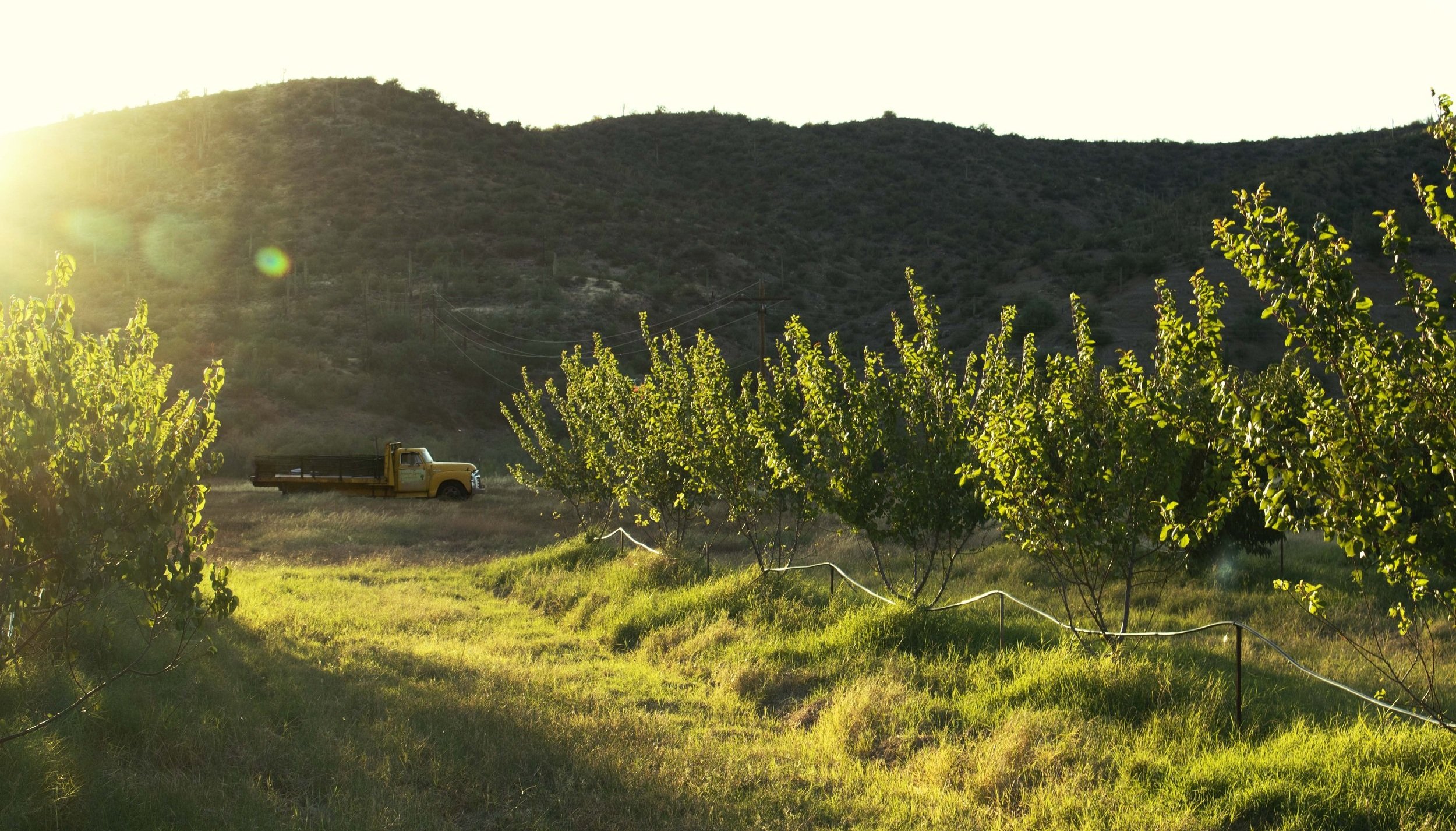
The Orchard
Our orchard has over 900 fruit trees, including peaches, apricots, apriums, pears, grapefruit, oranges, lemons, limes, figs, and pomegranates.
Tending these trees is a labor of love, not just for the produce but also for the land. As such, we strive for responsible food production, follow organic practices, and collaborate with local food banks and distributors.
At this time, we do not offer a "pick-your-own" fruit experience. However, we do have a variety of freshly picked fruit available for purchase.
Harvest Calendar
| APR | MAY | JUN | JUL | AUG | SEPT | OCT | NOV | DEC | JAN | FEB | MAR | |
|---|---|---|---|---|---|---|---|---|---|---|---|---|
| Katy Apricot | ||||||||||||
| Flavor Delight Aprium | ||||||||||||
| Robata Apricot | ||||||||||||
| Royal Blenheim Apricot | ||||||||||||
| Desert Gold Peaches | ||||||||||||
| Evas Pride Peaches | ||||||||||||
| Donut Stark Peaches | ||||||||||||
| July Elberta Peaches | ||||||||||||
| Mid-Pride Peaches | ||||||||||||
| Sweet Bagel Peaches | ||||||||||||
| August Pride Peaches | ||||||||||||
| Figs | ||||||||||||
| Hosui Pears | ||||||||||||
| Shinseiki Pears | ||||||||||||
| Ya-Li Pears | ||||||||||||
| Key Limes | ||||||||||||
| Pomegranates | ||||||||||||
| Meyer Lemons | ||||||||||||
| Lisbon Lemons | ||||||||||||
| Ponderosa Lemons | ||||||||||||
| Pink Grapefruit | ||||||||||||
| Ruby Red Grapefruit | ||||||||||||
| Mandarin Oranges | ||||||||||||
| Navel Oranges | ||||||||||||
| Tangelos | ||||||||||||
| Valencia Oranges |
-
KATY APRICOTS
The Katy Apricot Tree is one of the earliest ripening varieties. This variety of apricot is great for making jams or on desserts.
-

FLAVOR DELIGHT APRIUM
Aprium are a mix between apricots and plums. Similar to the Pluot, Aprium have more apricot look and flavor than the more commonly known combination of plum and apricot.
-
ROYAL BLENHEIM APRICOTS
This fruit has a greenish tint to the skin—it doesn’t mean it isn’t ripe, it is! The Royal Blenheim ripens from the inside out, so even though the green tint is still visible on the outside, the inside is sweet and ready to eat.

-

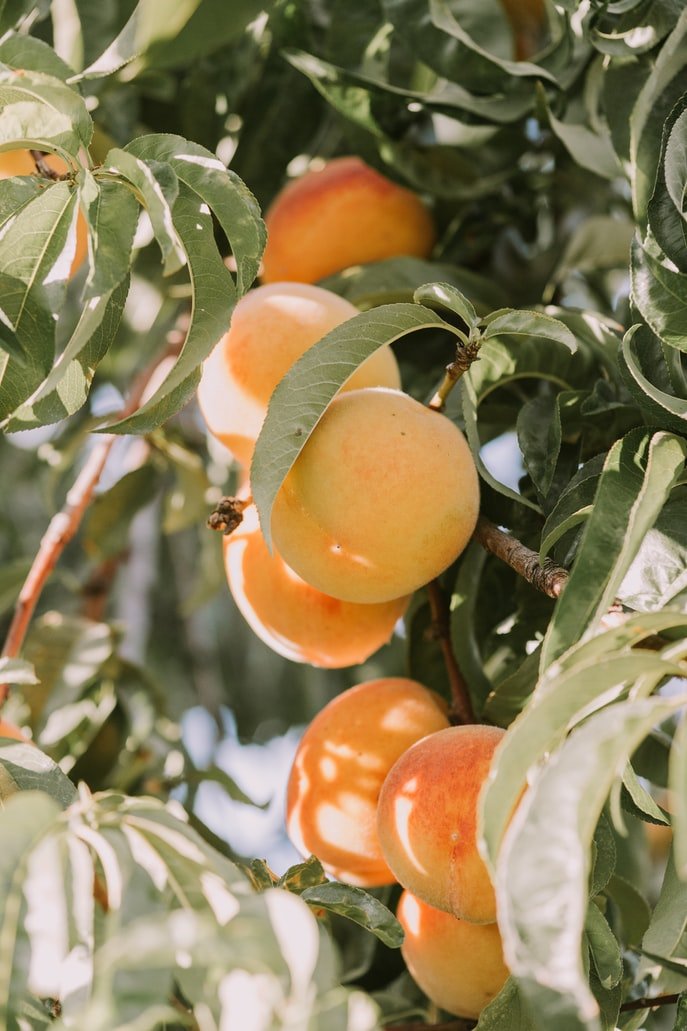
DESERT GOLD PEACH
This peach is called Desert Gold because of its tolerance to hot, dry environments, which makes it the perfect Southern Arizona tree. The peaches from these trees have yellow, firm skin with a red hue.
-

JULY ELBERTA PEACH
These peaches are good in everything! With a small pit-to-fruit ratio, you’ll have more fruit to add to pies, tarts, cans, or (if you just can’t wait) your mouth.
-
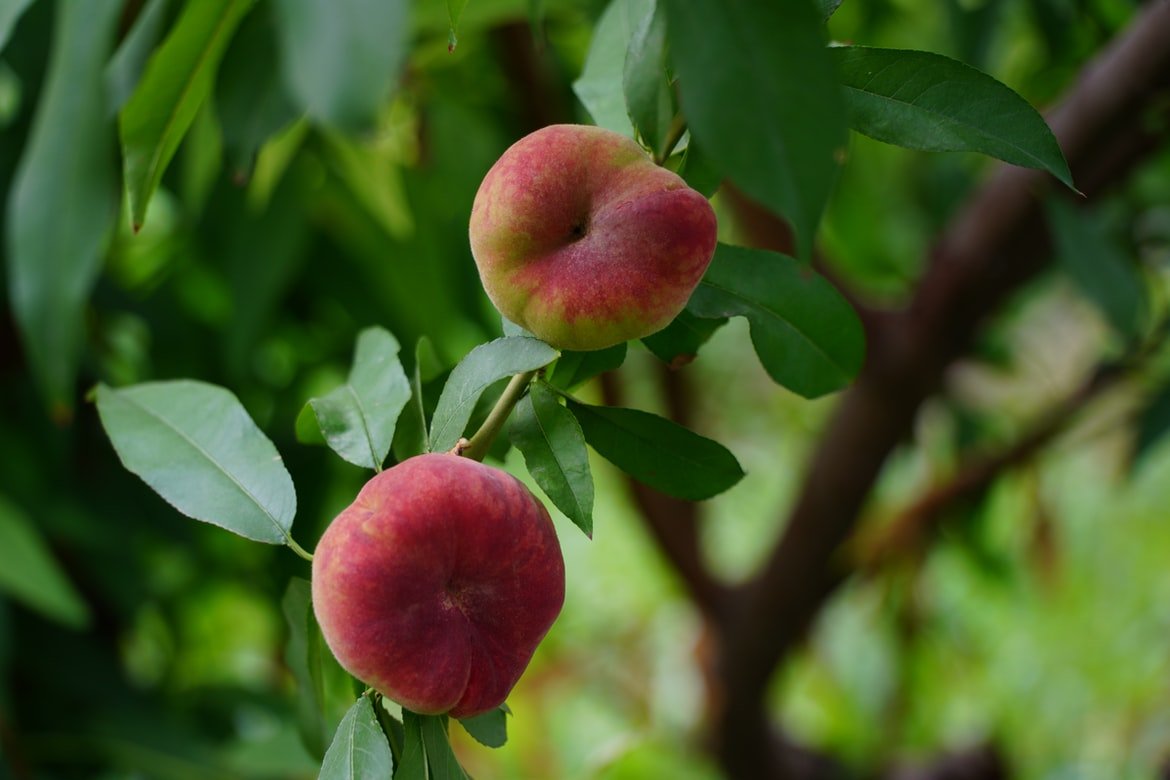
SWEET BAGEL PEACH
Sweet Bagels get their names from their flat, bagel shape. They are smaller in size, but that just means they have more concentrated flavor.
-

MID-PRIDE PEACH
This variety of peach grows well in warmer winter climates. It has a sweet flavor that makes it ideal for use in desserts.
-
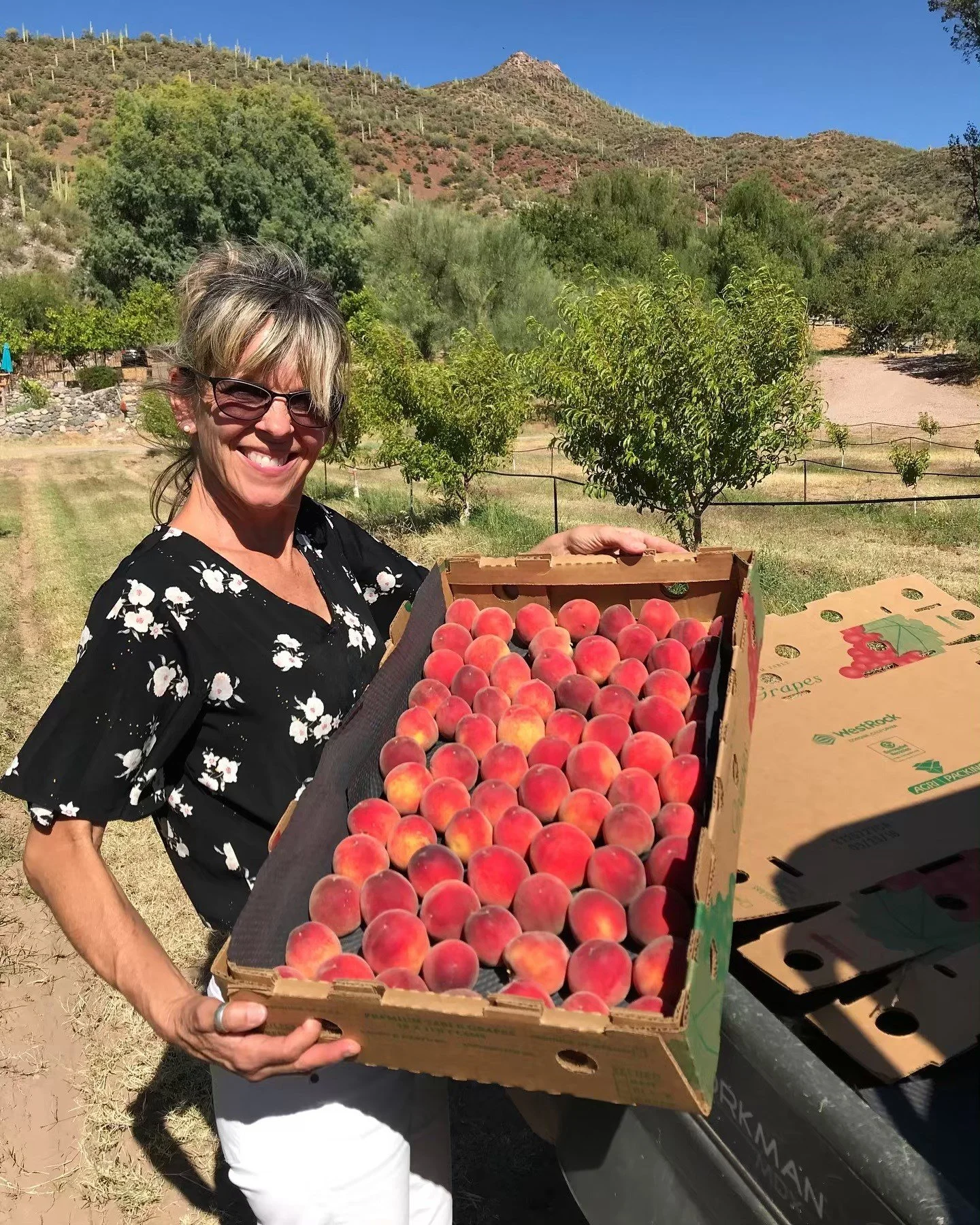
AUGUST PRIDE PEACH
The August Pride Peach ripens late in the season. It is sweet and rich in flavor, widely considered one of the best varieties, though we recommend you come try one of each of our varieties before deciding your favorite.
-

EVAS PRIDE PEACH
These peaches are delicious at the beginning of harvest when they’re still firm, as well as at the end when the juice runs down your chin.
-

DONUT STARK PEACH
These peaches, like the Sweet Bagel, are round and more flat than other peaches. They have a flavor that some say is almost almond-like.
-

FIGS
Figs, native to the Middle East and Western Asia, are rich in fiber, vitamins, and minerals, with a unique texture that continues to ripen after being picked.
-

POMEGRANATES
Pomegranates, native to the Middle East and South Asia, are known for their tough skin and jewel-like, sweet-tart seeds which are rich in antioxidants, vitamins, and fiber.
-

HOSUI ASIAN PEARS
Hosui means “abundant juice”. These pears are best eaten fresh, but can be baked into pies.
-

YA-LI ASIAN PEARS
This variety is from Northeast China, and translates to “duck pear”, due to their shape. These pears are very soft, and thus easily bruised. That doesn’t make them any less delicious!
-

SHINSEIKI ASIAN PEARS
These pears, like Housi, are round like an apple. These pears are best eaten fresh, but you can also slice them in a salad for a crisp, sweet additive.
-

MEYER LEMON
Meyer lemons are a cross between a Mandarin Orange and a Lisbon Lemon, making them much sweeter and darker in color than an average lemon. This makes them great for baking and juicing
-

LISBON LEMONS
Lisbon lemons are the common lemons, typically found in grocery stores. They have a tart flavor, and are used to flavor dishes and drinks.
-

PONDEROSA LEMONS
The Ponderosa lemon is a citrus hybrid of a pomelo and a citron. They are a much bigger variety, and we often use them as table setting decorations.
-
MANDARINS
The Mandarin orange is the smallest of the oranges we grow. Their peel comes off easily, and they are very sweet. We only have a few trees of this variety, so there are low production quantities.
-
VALENCIAS
Valencias are a sweet variety of orange that is harvested in the summer. It derives its name from Valencia, Spain. They are perfect for making homemade juice, or in baking recipes, as they contain very few seeds and are juicer than other orange varieties. We only have a few trees of this variety, so there are low production quantities.
-
NAVELS
Navels are oranges harvested in the winter. They are seedless and are sweeter than Valencias. Due to a compound in the fruit, these are better eaten fresh, rather than juiced. We only have a few trees of this variety, so there are low production quantities.


-
PINK GRAPEFRUIT
The pink grapefruit is the most popular version of grapefruit. When you buy grapefruit at the grocery store, it is most likely a pink grapefruit. It can be distinguished by its flesh, which has a pink hue. We only have a few trees of this variety, so there are low production quantities.
-

RUBY RED GRAPEFRUIT
The flesh of a ruby red grapefruit is much darker than that of its pink cousin. These grapefruit are seedless and very juicy. We only have a few trees of this variety, so there are low production quantities.
-

KEY LIMES
The Mexican lime is also known by the more common name: Key lime. The most common use of this lime is to make key lime pie, but limes can be added to cocktails, the juice can be used for baking and cooking, as well as the zest of the rind. We only have a few trees of this variety, so there are low production quantities.
